Trusted by Brands Across Global Markets
For over 15 years, more than 200 brands worldwide have chosen us as their manufacturing partner.
Years Experience
Brands Served




Client Cases
Real Product Challenges. Practical Manufacturing Solutions.
Good manufacturing is not only about following a specification. It is about understanding the product, identifying potential problems and finding the right solution before those problems reach the market. These four projects show how we work with our clients across fabric development, specialized production, fit and coordinated collections.
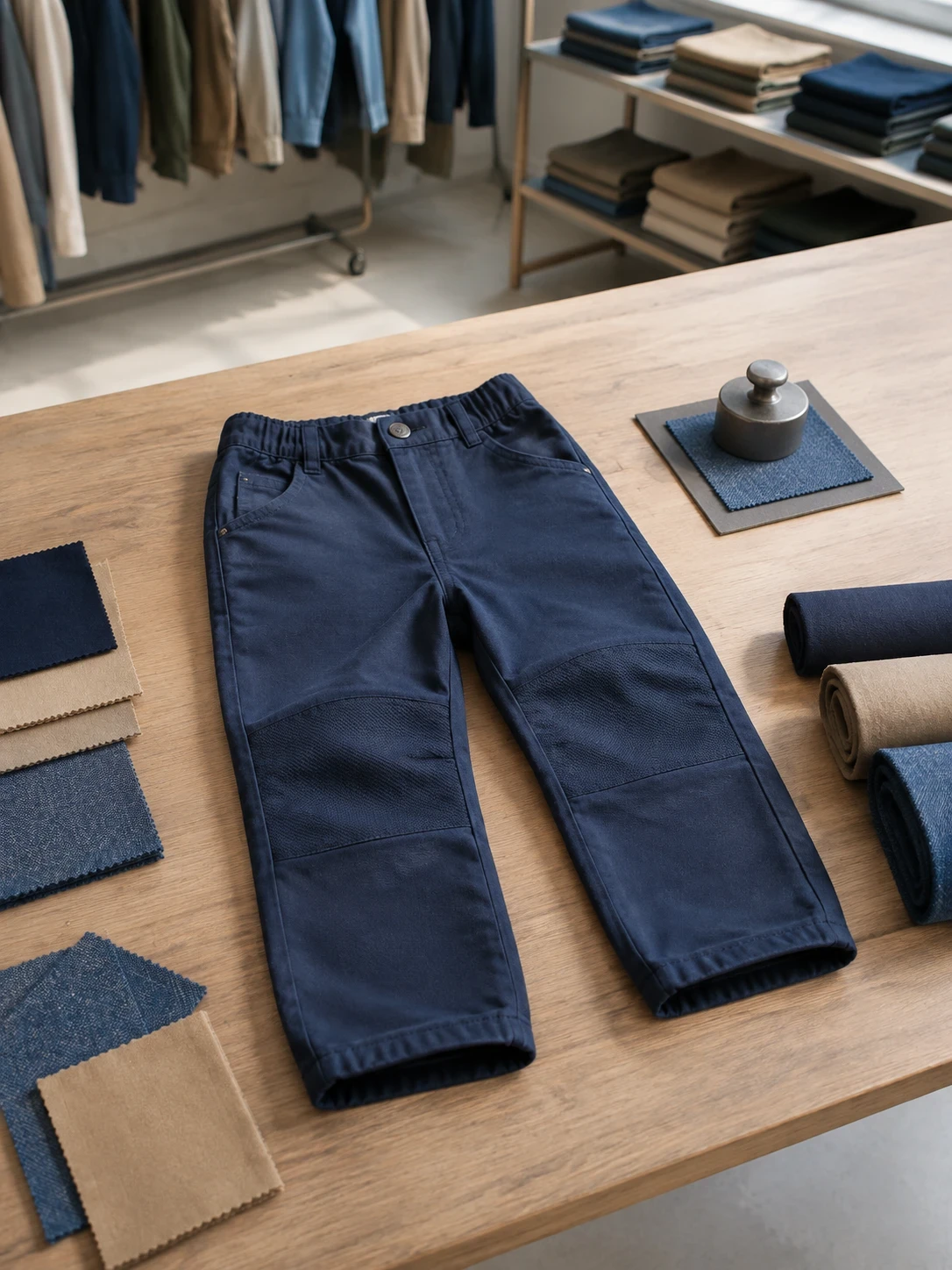
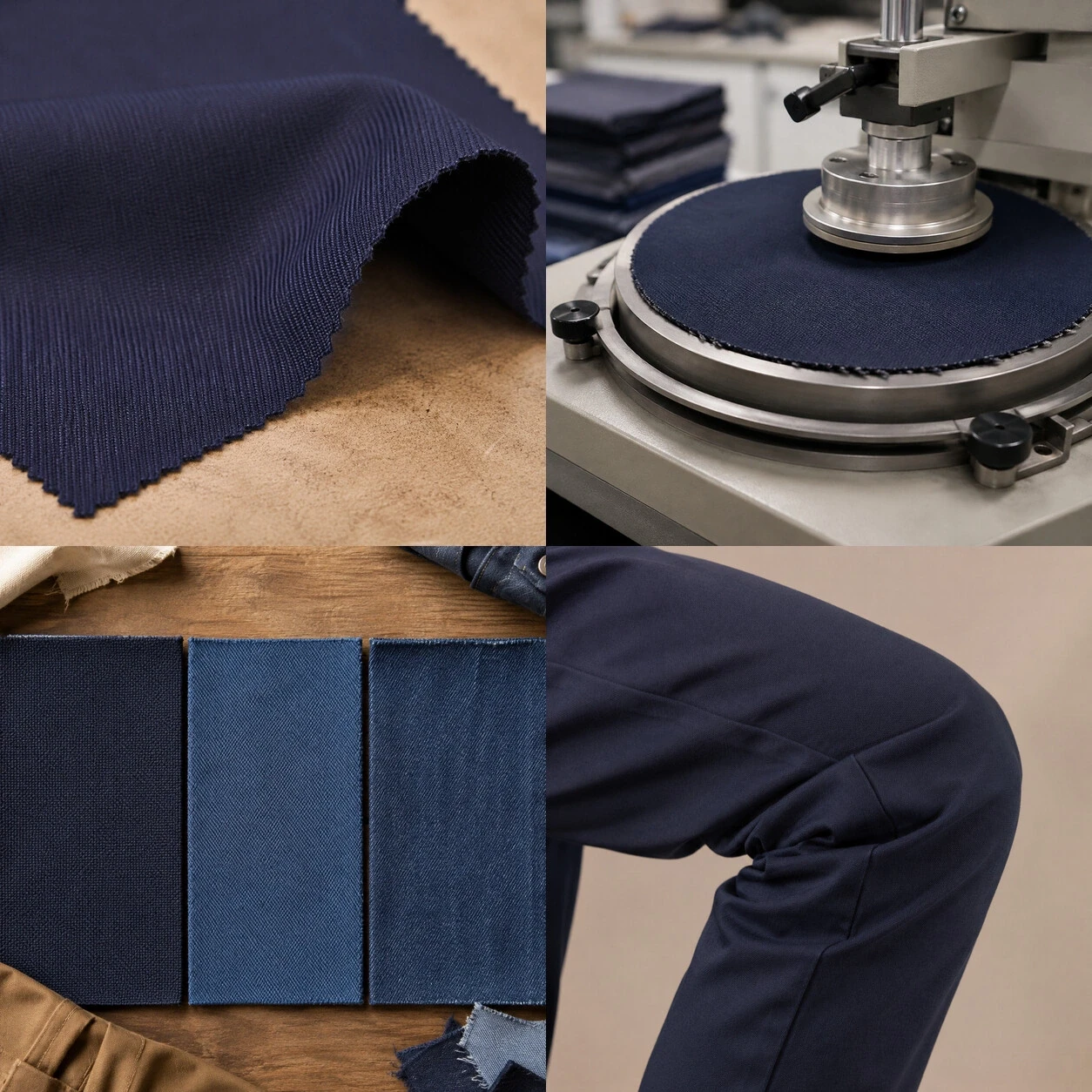
Developing More Durable Trousers for Active Children
Client Need
A French childrenswear client wanted to solve a common problem: children’s trousers often remained in good condition overall while the knees wore out first through repeated running, crawling and outdoor play.
The client needed a more abrasion-resistant trouser range without sacrificing the comfort, appearance and hand feel expected from childrenswear.
Key Challenge
Standard cotton fabrics could not provide the required durability. Adding too much synthetic fibre could improve strength, but it could also negatively affect the surface appearance, touch and overall quality of the finished garment.
The challenge was not simply to make the fabric stronger. It was to find the right balance between abrasion resistance, comfort and commercial appearance.
Our Solution
We worked with the client and fabric supplier to explore different fibre and construction options. After several rounds of development, a cotton, polyester and polyamide blend was selected to combine a natural cotton appearance with improved strength and abrasion resistance.
The developed fabric was then submitted for a Martindale Abrasion Test rather than being approved through visual assessment alone. The result reached approximately 20,000 cycles while maintaining the required appearance and hand feel.
Result
The initial fabric concept was successfully expanded beyond one trouser style. We subsequently developed abrasion-resistant canvas, twill and denim options, allowing the client to build a broader trouser collection around the same functional idea.
Several styles became strong-selling products and received repeat orders.
Approx. 20,000 Martindale Cycles
Durability developed without compromising comfort or appearance.
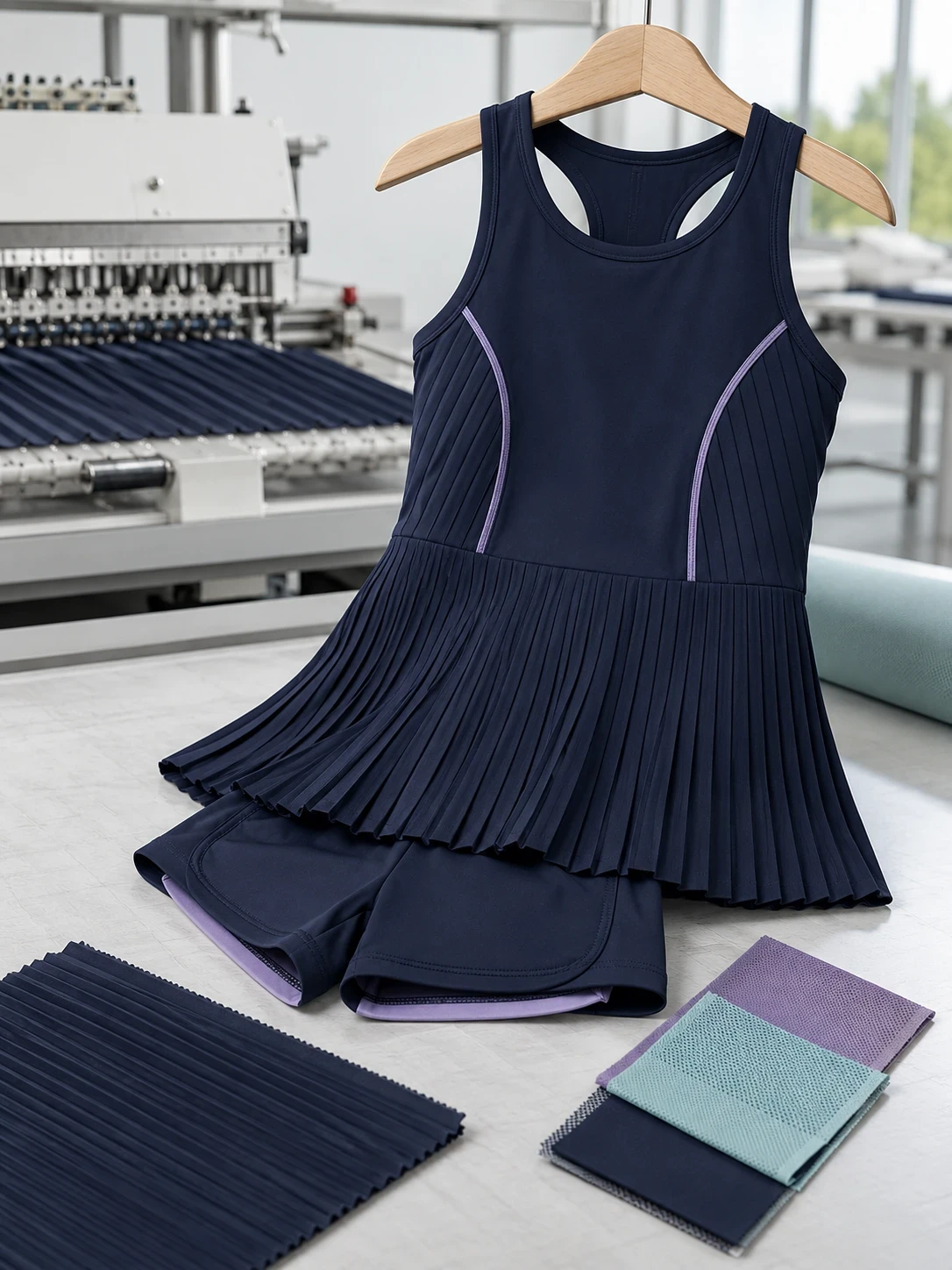
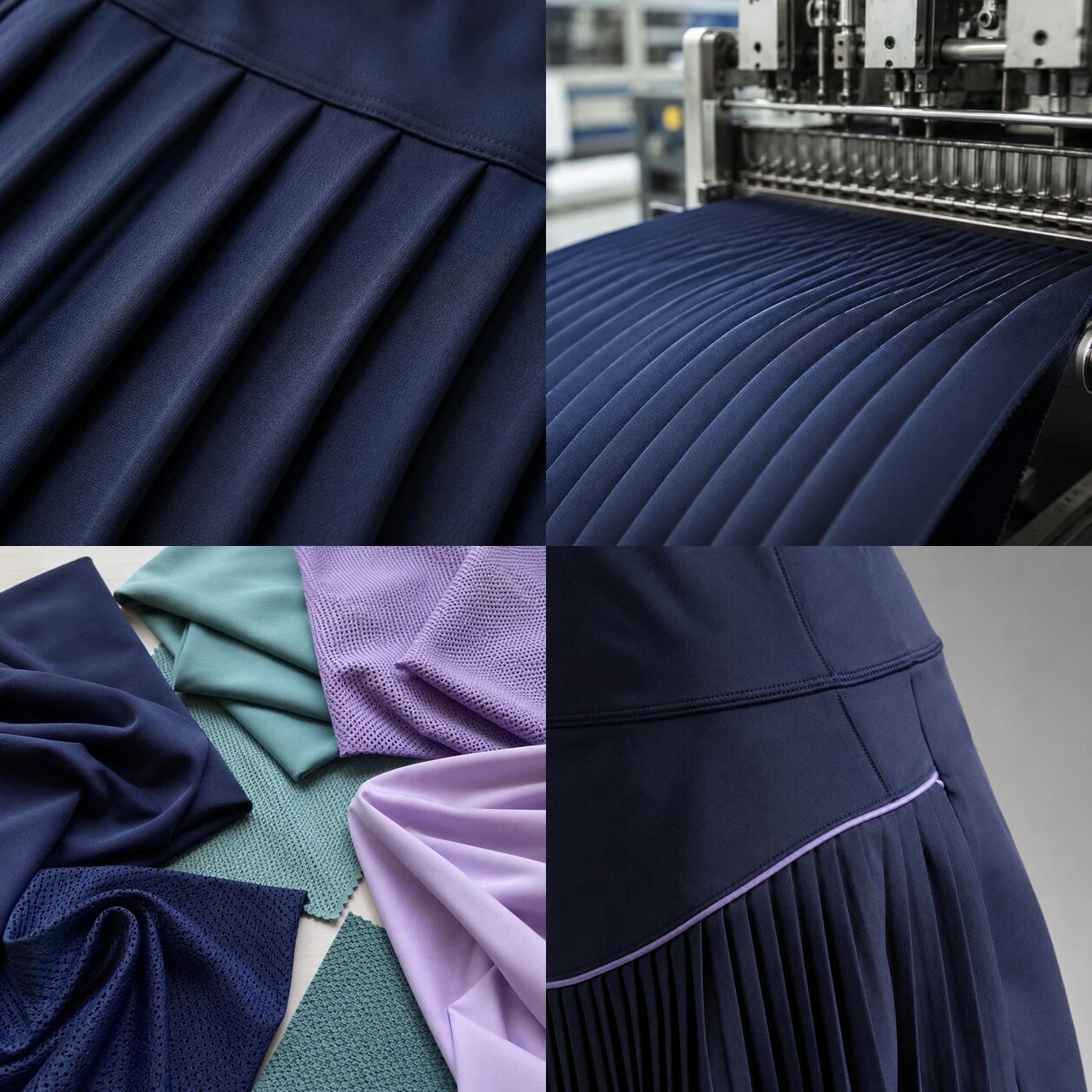
Building Specialized Production Capability for a Children’s Activewear Program
Client Need
A long-term U.S. childrenswear client was developing a children’s activewear program that required more than standard garment production.
The collection involved functional fabrics selected for moisture management, UV protection, comfort and appearance. Many styles also relied on pleating to create the movement, dimension and distinctive look of the finished garments.
Key Challenge
Although standard machinery could produce basic pleats, it could not consistently achieve the clean, even and dimensional effect required by the client, particularly when working with performance fabrics.
Simplifying the styles would have reduced the impact of the original designs, but the existing equipment could not deliver the required result reliably.
Our Solution
We worked with fabric suppliers to develop and select functional materials according to the requirements of each style.
To achieve the intended pleating effect, we invested in specialized pleating equipment and continued adjusting the process for the selected activewear fabrics. This gave us greater control over pleat definition, consistency and the final garment appearance.
Rather than asking the client to adapt the designs to our existing production limitations, we built the capability required by the product.
Result
The completed styles achieved the functional and visual results expected by the client and performed well after launch.
As more styles were successfully developed, the cooperation expanded from individual products into an ongoing activewear program. We now continue to support the client’s activewear styles each season.
From Individual Styles to an Ongoing Seasonal Program
We invested in the production capability required by the client’s designs.
Maternity Fit Is More Than Adding Room for the Bump
Client Need
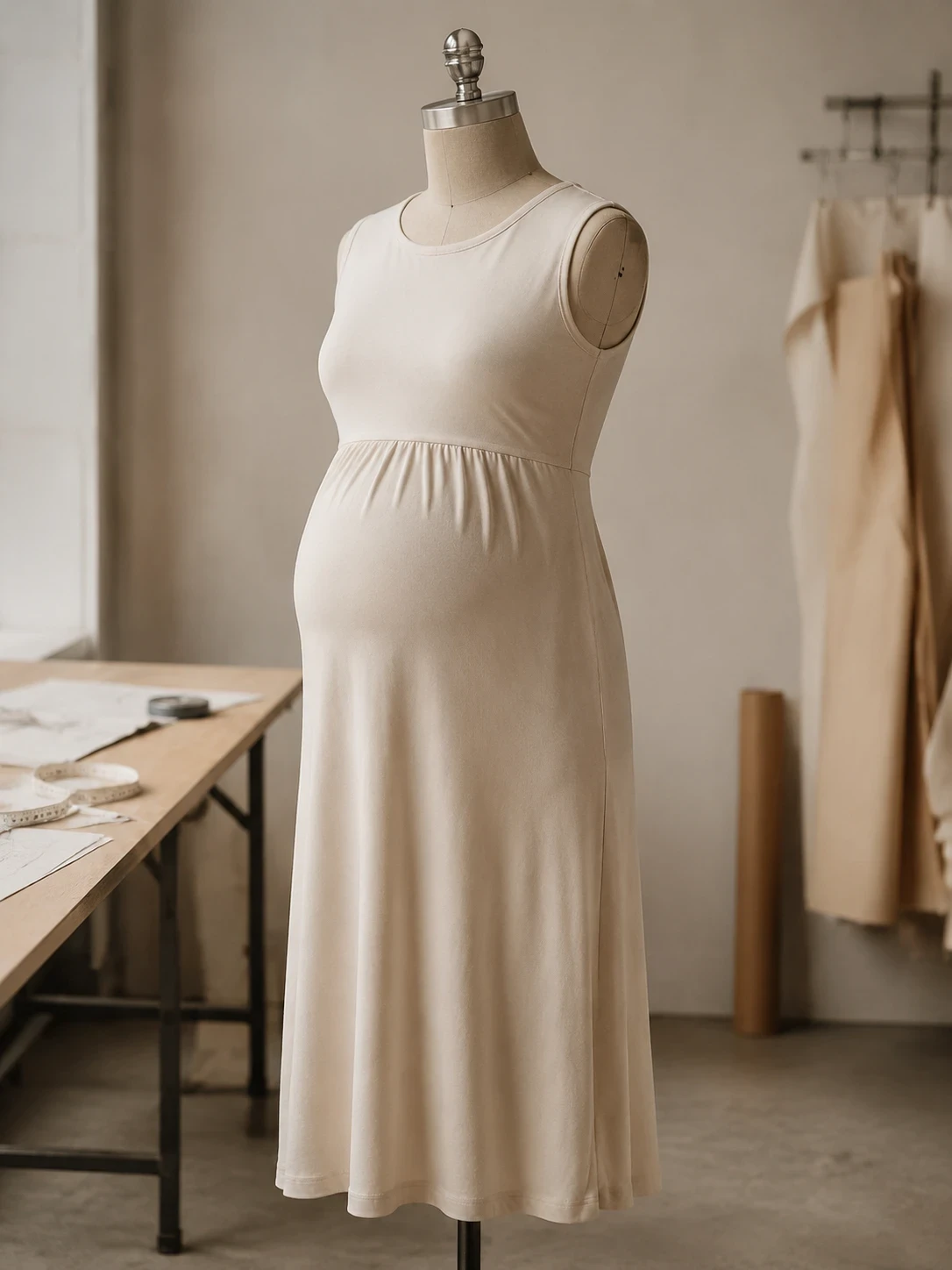
A French client asked us to develop a sleeveless maternity dress. The original sketch looked simple, but a maternity garment cannot be developed successfully by taking a standard women’s pattern and merely adding width around the waist.
A growing bump changes the three-dimensional balance of the entire garment, including volume distribution, front length, hem level and armhole fit.
Key Challenge
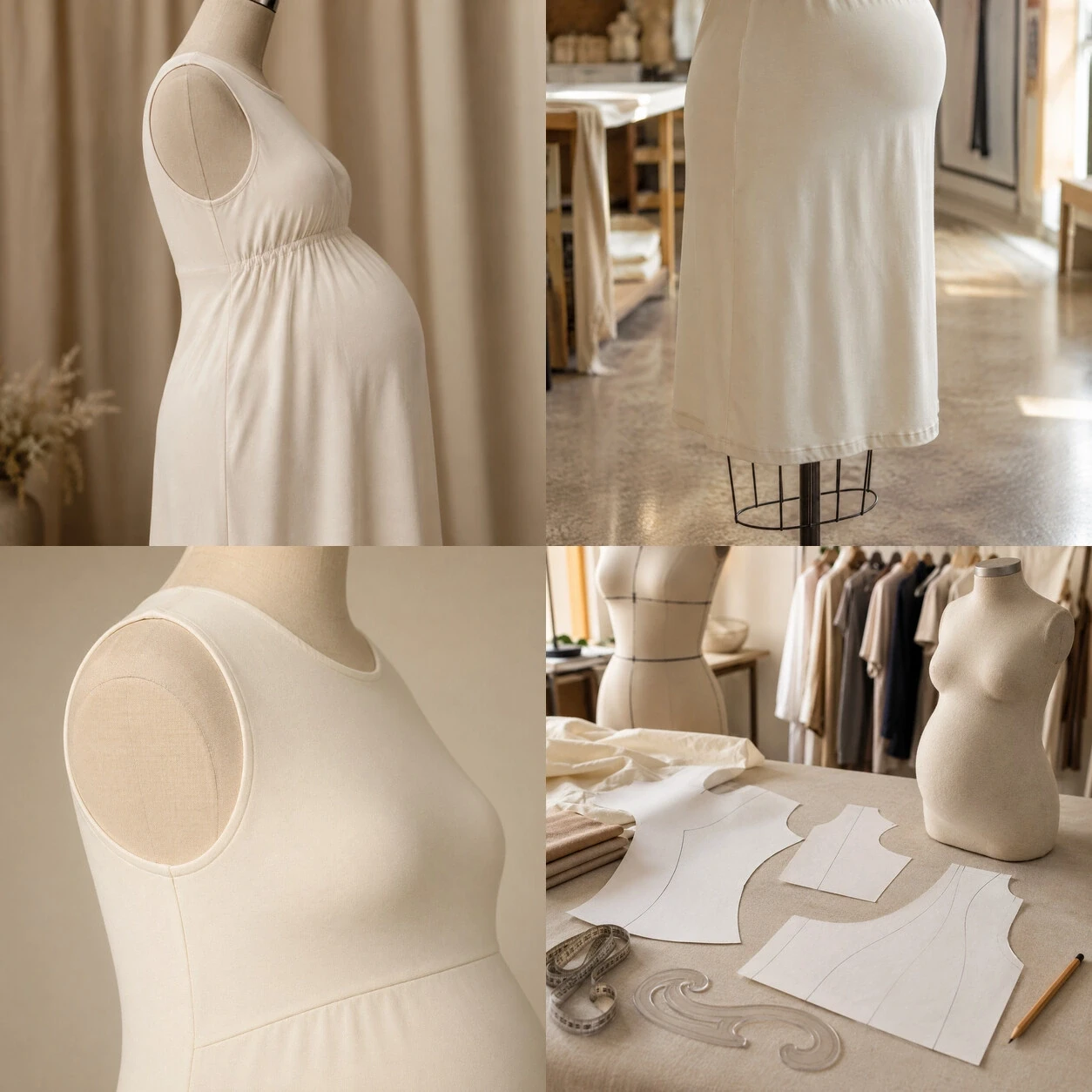
To evaluate the dress correctly, we purchased a European size 38 women’s mannequin and added a seven-month pregnancy bump attachment.
The first sample provided enough circumference around the abdomen, but fitting it on the maternity mannequin immediately revealed that the bump was pulling the front of the dress upward. The hem was no longer level.
After resolving the front balance, we identified a second issue: the sleeveless armhole was too large. From the side, the opening could expose the wearer’s underwear — an issue that was not obvious from the sketch, measurement chart or flat sample.
Our Solution
We redistributed the additional volume around and above the fullest part of the bump, allowing the fabric to fall naturally over the body instead of adding width mainly below the abdomen.
We then reviewed the armhole directly on the maternity mannequin and proposed a revised armhole measurement and shape.
This fitting process allowed us to identify and solve both issues before sending the revised sample to the client.
Result
The final sample provided comfortable space for the bump while maintaining a balanced hem, appropriate armhole coverage and the clean appearance of a well-fitted women’s dress.
The client was very satisfied with the revised fit, and the style received a repeat order in its second season.
During a later visit to the client’s office in France, the client specifically praised our maternity fit capability and discussed opportunities to place more maternity styles with us following the integration of a new maternity brand.
European Size 38 Mannequin + Seven-Month Pregnancy Bump
Real maternity fit must be evaluated on the correct body shape.
Creating a Coordinated Dress, Hair Accessory and Deer Toy Collection
Client Need
A U.S. childrenswear client wanted to develop a coordinated collection rather than a single garment.
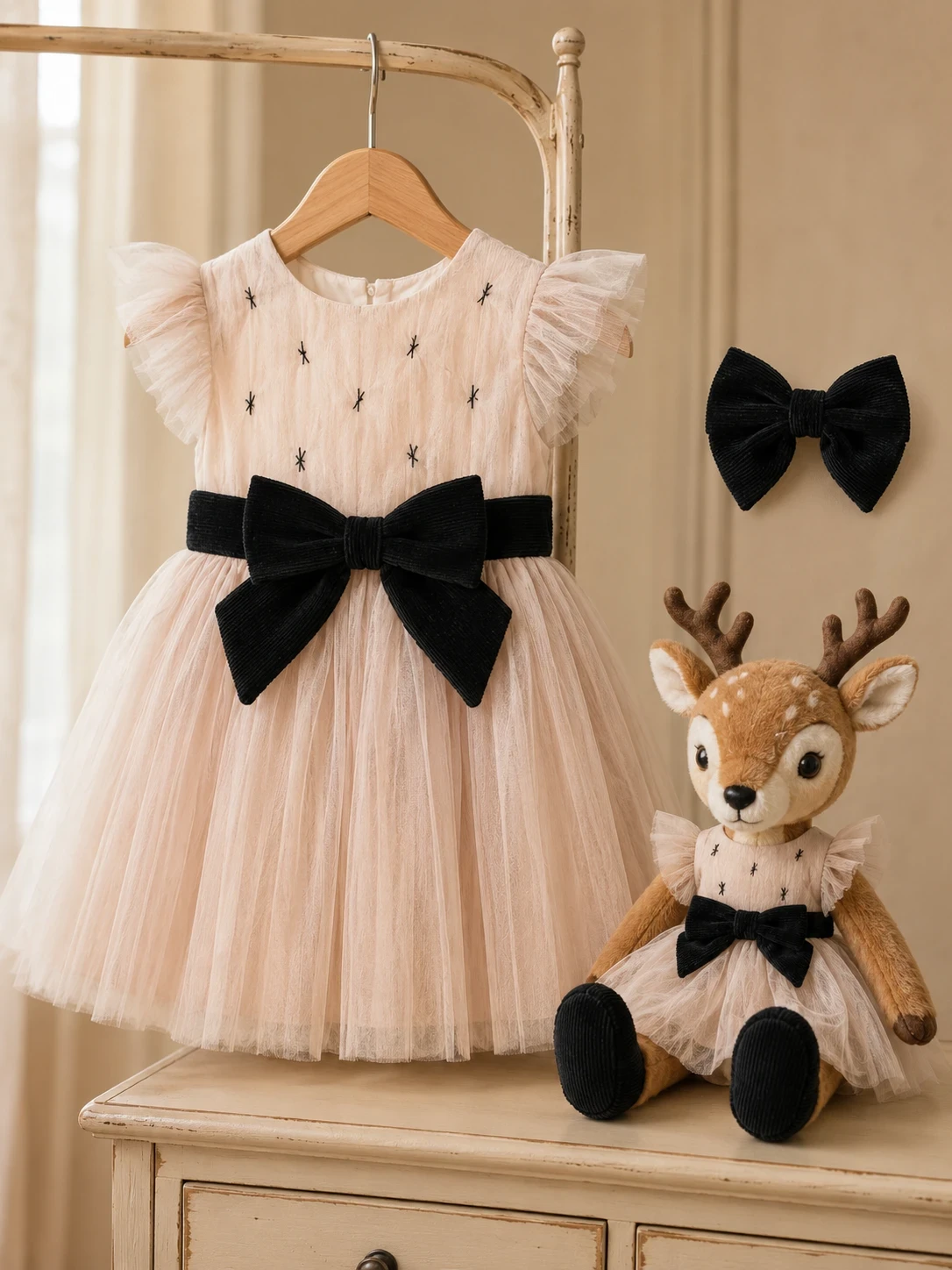
The main product was a girls’ tulle dress featuring a black corduroy waistband and bow. The same design language needed to extend into a matching corduroy bow hair clip and a deer toy wearing a miniature version of the dress.
The three products needed to look immediately recognizable as one collection: Dress + Matching Hair Accessory + Matching Deer Toy.
Key Challenge
The hair accessory could be developed using the same black corduroy as the dress, ensuring colour and material consistency. The deer toy was significantly more complex.
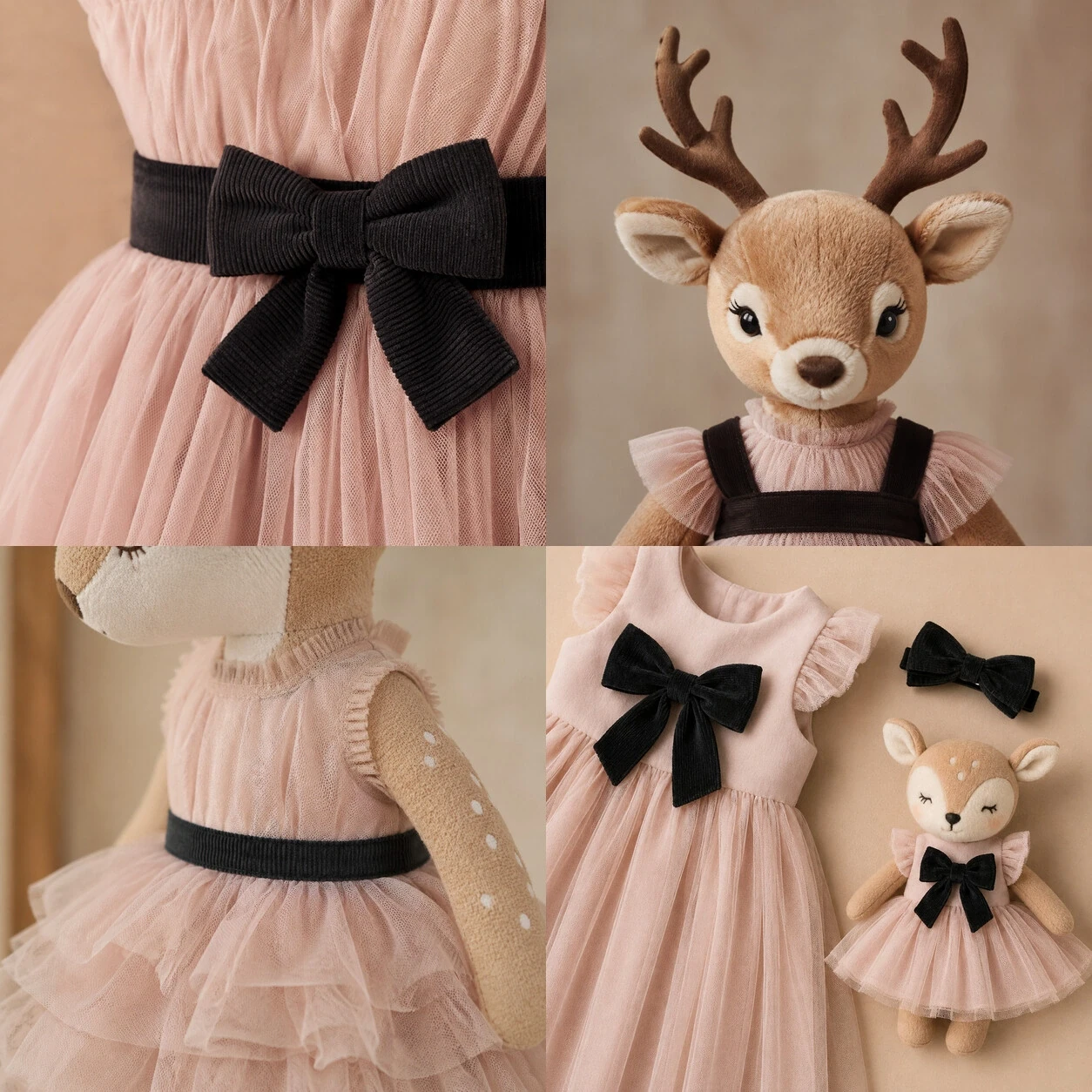
The shape of the antlers, face, eyes, limbs and shoes all required careful development. The most difficult part, however, was recreating the girls’ four-layer tulle dress at toy scale.
Garment dimensions can be reduced, but fabric thickness, stiffness, seam allowances and physical behaviour do not shrink at the same rate. Simply copying the original four-layer construction would have made the miniature dress bulky and rigid rather than light and delicate.
Our Solution
We developed the girls’ dress and the miniature toy dress together, comparing them throughout the sampling process.
Instead of mechanically copying every construction detail, we identified the visual elements that had to remain consistent and adjusted the miniature dress’s layers, gathering, proportions and sewing methods for the smaller scale.
At the same time, we refined the deer’s facial expression, antlers, shoes and body proportions so that the toy felt like a complete product rather than a standard toy with an added dress.
Result
The final delivery brought together three different product systems — garment development, soft toy development and accessory development — within one consistent design language.
The dress, deer toy and hair clip worked as a unified coordinated collection while each product retained the construction appropriate to its own materials and scale.
Same Look — Not Simply the Same Construction
One design language developed across garments, accessories and soft toys.
Have a Product Challenge of Your Own?
Whether you are developing a new collection, improving an existing product or looking for a manufacturing partner with stronger product execution, tell us what you are working on. Our team will review your requirements and get back to you shortly.
Get a Free Quote
Tell us what you're looking for. We'll get back to you shortly.